
Formulating piglet diets is both science and experience
By Jes Klausen, Nutritionist at Hamlet Protein, with 30+ years of experience in young animal nutrition.
Formulating piglet diets is a nuanced blend of science, experience, and ingredient quality. In my work as a nutritionist at Hamlet Protein, I’ve combined all three to help nutritionists make informed choices when selecting protein ingredients.
Formulating piglet diets, especially pre-starters and starters, was once straightforward: milk powder, fishmeal, and grains. Over time, soybean meal (SBM) gradually replaced traditional protein sources, aided by the use of antibiotics. Today, with the restrictions on antibiotic usage and the ZnO ban in the European Union, it can be challenging to select the right kind of protein source for young piglet diets.
What was once a simple recipe has evolved into a complex balancing act, especially considering regulatory changes and growing performance expectations. My perspective comes from both as the owner of a swine farm and my experience as a nutritionist, who has travelled to swine farms all over the world.
Today, soy-based ingredients dominate piglet diets. Choosing the right soy product is a decision I approach with both technical knowledge and practical experience. Understanding the processing methods behind soy products is essential, as they directly affect the soy product quality and piglet outcomes.
For over 30 years, Hamlet Protein has helped nutritionists understand how anti-nutritional factors (ANFs) negatively impact young animals and their digestive development. Our extensive trial work has culminated in robust meta-analysis, reinforcing the importance of managing ANFs in early-life nutrition.
While formulation software prioritizes cost-efficiency, I have seen first-hand how it may overlook critical quality factors that influence long-term piglet health and performance. It’s the nutritionist’s expertise that determines which ingredients are offered to the system and in the end, it comes down to the knowledge of the nutritionist and the balance between price and performance of the ingredients.
Human infants receive foods that are gentle on their digestive systems when they are weaned. This thoughtful approach is rooted in a deep understanding of how early nutrition affects long-term well-being. Similarly, young piglets are at a critical developmental stage as they transition from milk to solid feed. Their digestive systems are still maturing, making them particularly sensitive to the quality and composition of their diets. Choosing high-quality, carefully processed protein sources, rather than simply opting for the least expensive option, can have a profound impact on their health, growth performance, and resistance to disease.
I believe we should apply the same principles and care to piglet nutrition that we use with our own children. This way, nutritionists and producers can help ensure that young animals thrive, reducing the need for costly additives or interventions and setting a strong foundation for future growth, productivity, and profitability.
When nutritionists choose low quality soy products they often end up using additives as an insurance against lower performance and the farmer end up using antibiotics to solve post weaning diarrhea (PWD). Ironically, using low-quality soy often leads to higher costs due to the need for additives and antibiotics. In my experience, the cost of 2–3 additives offset the price difference of switching from a low/medium quality soy product to a high-quality soy product.
Over the years, I’ve developed a framework to help nutritionists balance cost-efficiency with long-term health and productivity outcomes. The table below reflects parameters I consider essential and provides a comparative overview of key nutritional parameters considered in piglet diet formulation. It distinguishes between those typically included in least-cost formulation software and those recognized through practical experience, while also indicating their relative impact on lifetime performance.
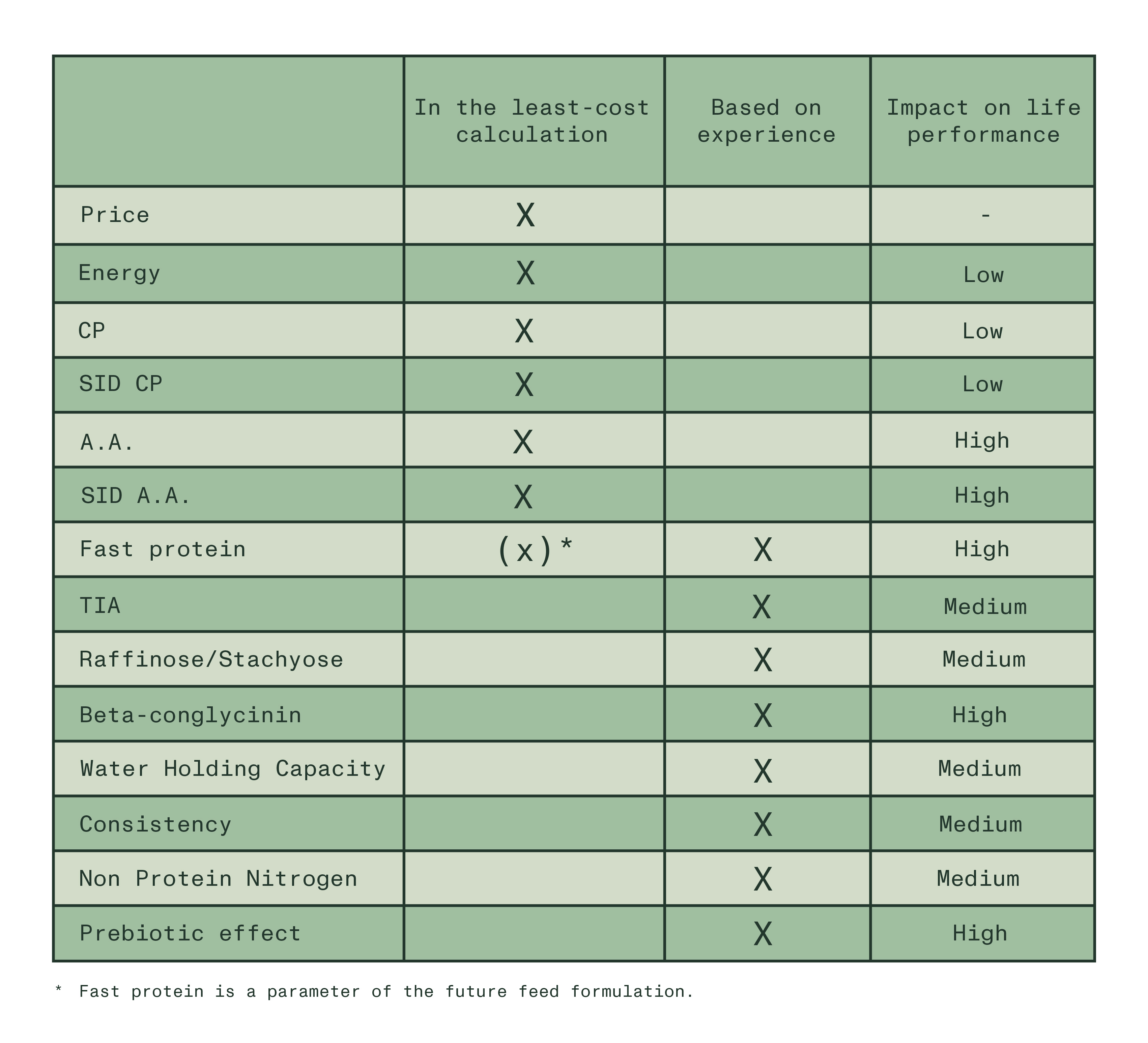
Table 1: Key parameters used in piglet diet formulation, distinguishing those driven by cost-based software from those informed by experience
Every parameter has a value, but if it does not show in the price per kilo of pre-starters and starters it can be confusing and even difficult to make the best choice. The effect of each parameter on life performance is based on experience.
I’ve found that better understanding of the quality issue for ingredients for young animal nutrition is always a challenge. Despite well-established nutrient requirements, ingredient assessment, especially for soy products, remains a grey area. University textbooks often devote just a few pages to young animal nutrition, offering little guidance beyond “use high-quality ingredients.”
The nutrient requirements for young animals are quite well understood, but the assessment of ingredients and how to select the real high-quality ones is an open question. Some guidelines are established on national levels and in the different feed companies working with young animal nutrition, but when it comes to soy products it is a jungle.
Precision feeding, which is a growing trend in animal nutrition, emphasizes the importance of ‘fast protein,’ which supports early digestive development by providing a more accessible amino acid profile. I recommend selecting ingredients containing fast protein to support early life nutrition. This means that small piglets developing their digestive system will have an advantage when they have access to a better combination of amino acids.
Understanding how better young animal nutrition can improve general health and lifetime performance starts by carefully selecting your partners. I host Masterclass sessions to help nutritionists deepen their understanding of ingredient quality and early-life nutrition. Join me to gain hands-on insights and help your piglets thrive from day one.
Events with Hamlet Protein
We attend events around the world. Meet us at exhibitions and seminars - we always look forward to welcoming you!
We also sponsor conferences with focus on young animal nutrition.
Have a look below where to meet us next.

About HAMLET PROTEIN
