
Help prevent nutritional scours in young calves with highly digestible protein
By Nicolas Anglade, Category Manager Ruminants, Hamlet Protein
Nutritional scours in calves can reduce growth performance, impair nutrient utilization, and increase management challenges during the first weeks of life. While infectious diseases are often investigated first, dietary factors such as poorly digestible proteins and anti-nutritional factors can also contribute to calf diarrhea. Understanding how protein digestibility affects gut health can help producers support healthier, more resilient calves.
Calf remain one of the major health challenges facing modern ruminant production systems worldwide. Beyond their immediate effects, digestive disorders occurring during the first weeks of life may have long-lasting consequences on digestive efficiency, immune competence and future animal performance.
Although infectious agents such as Escherichia coli, rotavirus, coronavirus, Cryptosporidium spp., and Salmonella are frequently implicated, the nutritional origin of digestive disorders is now increasingly recognized (Brunauer et al. 2021). Under field conditions, episodes of loose feces or intermittent calf scours are often multifactorial, resulting from a delicate balance between digestive immaturity, feeding practices, ingredient quality and environmental pressures.
In this context, maintaining intestinal integrity from the earliest stages of life has become a major objective. Among the nutritional factors involved, protein quality and digestibility play a central role.
Why young calves are vulnerable to digestive disorders
The combination of digestive immaturity, ongoing rumen development, and dietary transitions can increase the risk of nutritional calf scours during the first weeks of life.
During the first weeks of life, the calf's digestive system is in full development. Enzyme secretion capacity remains limited. The microbiota is still being established and both rumen functional development and intestinal mucosa barrier function are not yet fully mature.
At the same time, young calves must deal with several critical feeding transitions:
- from colostrum to whole milk or milk replacer
- progressive introduction of solid feeds
- weaning
- colonization and stabilization of the ruminal and intestinal microbiota.
These developmental stages place considerable stress on digestive function and nutrient absorption efficiency.
Under such conditions, poorly digestible ingredients, components rich in anti-nutritional factors or those with a high fermentative potential can easily disrupt digestive homeostasis.
When undigested nutrients reach the hindgut, they become substrates for microbial fermentation, leading to increased osmotic pressure, irritation of the intestinal mucosa, digestive discomfort (bloating) and ultimately contribute to loose feces and reduced feed intake.
In the absence of obvious infectious signs, a nutritional origin is habitually suspected.
How anti-nutritional factors can affect calf gut health
Soybean is widely used in animal nutrition because of its high protein content, favorable amino acid profile and worldwide availability. However, conventional soybean products contain significant amounts of compounds that may impair digestion in young calves.
In young calves, anti-nutritional factors (ANFs) may compromise gut integrity, reduce nutrient absorption efficiency, and contribute to digestive disturbances such as calf diarrhea and loose feces.
Among the most important anti-nutritional factors (ANFs) are trypsin inhibitors, antigenic soybean proteins such as β-conglycinin, oligosaccharides including stachyose and raffinose and sucrose in the case of pre-ruminants.
These compounds are particularly problematic in young animals whose digestive capacity and immune system are still immature.
ANFs may reduce protein digestibility, trigger local inflammatory responses, and impair the structure and integrity of intestinal villi.
Yet, the intestinal villi play a fundamental role in the absorption of amino acids and glucose, as well as in maintaining water and electrolyte balance. Any damage to their structure rapidly translates into reduced digestive efficiency and deterioration of fecal consistency.
Key Takeaways
- Nutritional scours can occur even in the absence of infectious disease.
- Poorly digestible proteins increase hindgut fermentation.
- Anti-nutritional factors can impair gut integrity.
- Highly digestible protein sources support digestive stability.
- HP 100 and HP 300 are designed to improve protein utilization in young calves.

Why protein digestibility matters for calf gut health
Improving protein digestibility is not only about maximizing growth performance; it is also a key strategy for maintaining digestive health.
Highly digestible proteins reduce the amount of fermentable substrates reaching the large intestine, thereby limiting osmotic disturbances and contributing to a more stable intestinal microbiota.
This issue is particularly critical in young calves during the milk-feeding phase, at the introduction of starter feeds and across the weaning transition.
In this early nutrition context, enzymatically treated soy proteins, characterized by a markedly reduced content of ANFs and improved digestibility, represent an attractive nutritional strategy to support gut health and digestive stability in young calves.
Supporting digestive stability during the milk-feeding phase with HP 100
Dairy proteins, such as are traditionally considered the gold standard for calf milk replacers because of their excellent amino acid profile and digestibility. However, their high cost has stimulated the search for more economical alternative protein sources without compromising calf performance and gut health.
Among vegetable proteins, soy protein stands out because of its high protein concentration and favorable amino acid profile. Nevertheless, not all soy products are equally suitable for young calves. Besides nutritional value, high digestibility and adequate functional properties are essential to ensure digestive comfort and optimal nutrient utilization.
Enzymatically treated soy proteins such as HP100 have been specifically developed to meet these requirements. A recent study has shown that replacing up to 50% of whey protein concentrate with HP100 in calf milk replacers, while maintaining growth performance, significantly improving fecal consistency (Figure 1) during the first four weeks of life.
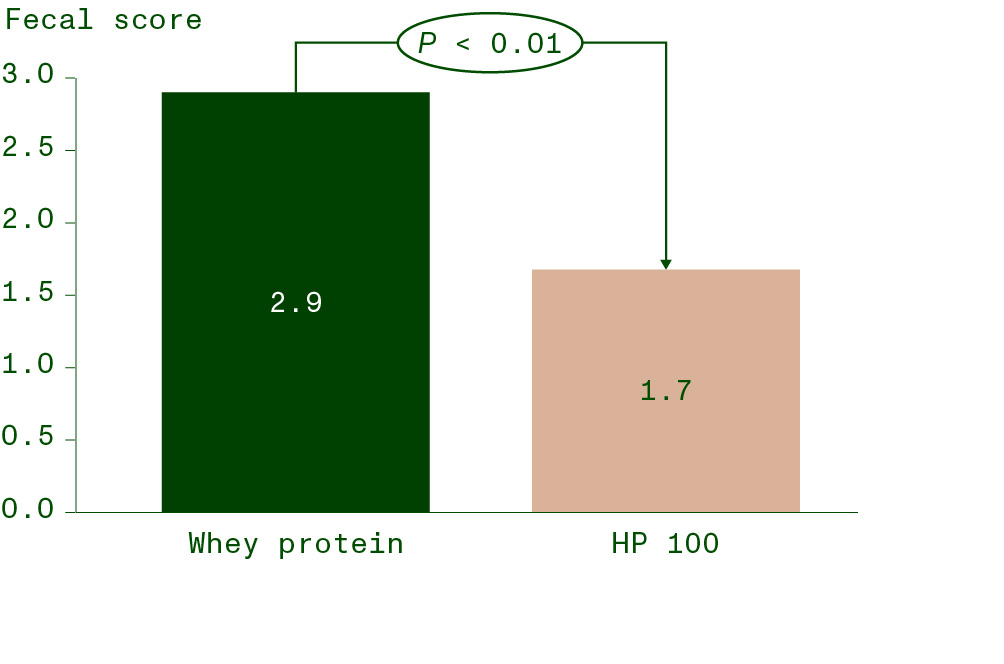
Figure 1. Fecal scores were assigned twice per day based on the following values: 1=normal, solid; 2 = semi-formed, pasty; 3=loose, stays on top of bedding; 4=watery, sifts through bedding. Source: Ansia I. et al. 2020
These results highlight the importance of protein quality and digestibility in supporting digestive stability during the pre-weaning period.
The choice of protein source in calf milk replacers can influence digestive stability and may affect the occurrence of nutritional calf diarrhea during the first weeks of life.
Supporting calf gut health during weaning with HP 300
The transition from liquid milk feeding to solid feed represents one of the most critical phases in calf development. As milk intake declines, calves become increasingly dependent on their ability to digest and absorb nutrients from dry starter feeds.
This period is frequently associated with digestive instability, inconsistent feed intake and variable growth performance, highlighting the importance of highly digestible and gut-friendly ingredients. Maintaining digestive stability during the weaning transition is critical because calves increasingly rely on solid feed while rumen function continues to develop.
HP 300 has been specifically developed for inclusion in starter diets for young calves in place of currently used soybean or rapeseed meals.
At first glance, one might assume that anti-nutritional factors (ANFs) contained in soybean meal (SBM) are largely neutralized by ruminal fermentation. However, studies have shown that both the rumen and the intestine respond differently to enzyme-treated soy proteins (HP 300) than to conventional SBM.
Compared with conventional soybean meal (SBM), HP 300 improved microbial protein synthesis by 22%, reduced non-protein nitrogen excretion by 17%, and increased ileal protein digestibility by 10% (Ansia et al., 2021). These findings suggest that less undigested protein reaches the distal part of the intestine.
As a consequence, fewer substrates are available for excessive hindgut fermentation, contributing to improved digestive stability during the critical weaning period.
This effect was clearly illustrated in a trial conducted at Aarhus University, Denmark, in 2019 (Figure 2). Two weeks after weaning, calves receiving starter feed containing HP 300 exhibited significantly firmer feces and cleaner hindquarters than calves fed conventional SBM. These observations indicate that improving protein quality and digestibility may translate into tangible benefits under practical feeding conditions.
Calves have significantly cleaner hindquarters and firmer feces two weeks post weaning when HP 300 is fed in starter feed compared to SBM
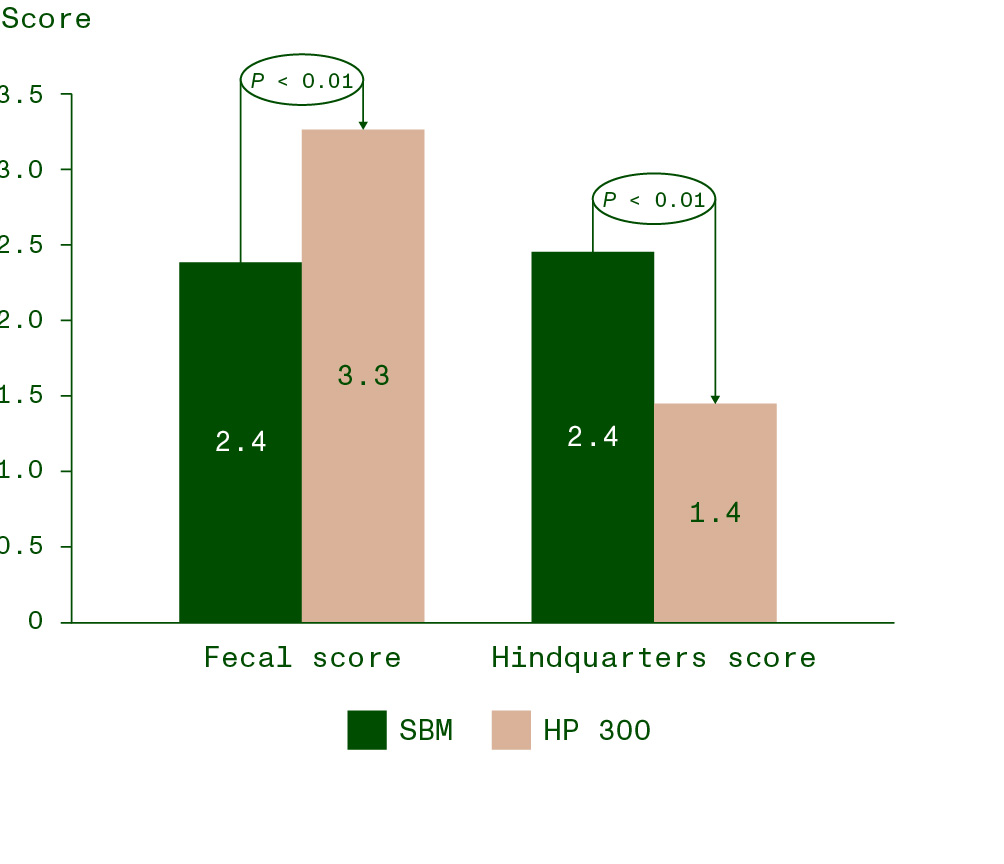
Figure 2. Feces were firmer (1, liquid – 5, hard) and the hindquarters were cleaner (1, clean – 4, dirty) two weeks post weaning when HP 300 was fed in starter feed to calves. Source: Brøkner C. et al. 2019
By improving protein digestibility and minimizing the impact of anti-nutritional factors, HP 300 helps support gut integrity and digestive stability during this challenging transition period, ultimately contributing to more robust and uniform calves.
Practical strategies to support digestive health in young calves
Modern calf-rearing programs increasingly emphasize preventive approaches aimed at strengthening digestive resilience rather than merely responding to disease challenges.
While hygiene, colostrum management and pathogen control remain the cornerstones of calf health, ingredient selection has emerged as an additional lever to support digestive function and optimize animal performance.
In practice, improving protein digestibility and minimizing anti-nutritional factors can help:
- reduce the risk of nutritional calf scours;
- maintain calf gut health and integrity ;
- improve nutrient utilization;
- support animals during the weaning transition;
- promote healthy rumen development.
Therefore, the challenge for nutritionists is no longer limited to meeting crude protein requirements, but rather to supplying highly digestible proteins that maximize nutrient efficiency and support gut function during critical stages of development.
Supporting healthier calves through highly digestible protein nutrition
Early-life digestive health lays the foundation for future performance. In young calves, whose digestive and immune systems are still developing, protein quality plays a pivotal role in maintaining intestinal integrity and ensuring efficient nutrient utilization.
Poorly digestible proteins and residual anti-nutritional factors may increase hindgut fermentation and compromise gut function, whereas optimized protein sources such as HP 100 and HP 300 help support digestive stability during both the milk-feeding and weaning periods.
By integrating highly digestible proteins into calf feeding programs, producers can promote the development of healthier, more robust and more uniform animals, ultimately creating the conditions for improved lifetime productivity.
By improving protein digestibility, reducing anti-nutritional factors, and supporting both gut integrity and gut health, nutritionists can help reduce the risk of calf diarrhea and calf scours during the milk-feeding and weaning periods. Highly digestible ingredients can therefore play an important role in successful milk replacer and starter feed programs.
Looking for ways to improve digestive stability and nutrient utilization in calf feeding programs? Contact Hamlet Protein to learn how HP 100 and HP 300 can support gut health during critical stages of calf development.
Why does protein digestibility matter?
Highly digestible proteins support calf gut health by reducing the amount of undigested nutrients reaching the hindgut, helping maintain digestive stability and reducing the risk of nutritional scours
About HAMLET PROTEIN
