
Partial Fish Meal in Shrimp Feed: How to Maintain Performance
By Marisabel Caballero, Category Manager Monogastrics, Hamlet Protein
Fishmeal is the benchmark protein source for Aquaculture-species diets. It provides a balanced protein with high digestibility, attractability, and palatability. Moreover, it provides additional benefits, such as immune modulation, oxidative status, and gut health.
However, limited supplies, high prices, sustainability concerns, and unstable fish meal quality have pressured the industry to transition to terrestrial animal and plant protein sources, such as soybean meal.
Concerns about antinutritional factors (ANFs), protein digestibility, and amino acid value are raised by nutritionists when evaluating the use of terrestrial proteins in aquaculture species.
To replace fishmeal, nutritionists must look for the best nutritional quality. By using novel indicators such as the fast-protein-to-resistant-protein ratio, nutritionists can compare the protein efficiency of different protein sources. HP 300 by Hamlet Protein has demonstrated its potential as a fish meal replacer in fish and shrimp diets.
Why Protein Quality Matters in Shrimp Feed Formulation
In practical fish and shrimp formulation, protein evaluation has traditionally focused on a few primary criteria:
- Crude protein (CP) content
- Apparent digestibility (AD) of amino acids (AA)
- Protein efficiency ratio (PER)
While these parameters are essential, they are not sufficient to fully characterize the biological and functional effects of protein in fish and shrimp diets. Protein evaluation, for instance in poultry and swine, is increasingly moving beyond crude protein and amino acid digestibility to include digestion kinetics and physiological functionality.
Non-protein nitrogen muddles the picture when evaluating protein quality
A limitation of relying on crude protein as a measure of ingredient quality is that it includes non-protein nitrogen (NPN). In fish meal, a portion of the measured nitrogen originates from free amino acids, nucleotides, and other low-molecular-weight nitrogenous compounds rather than intact proteins.
While some of these compounds contribute to feed attractability and may have functional benefits, others like biogenic amines, total volatile basic nitrogen (TVB-N), and ammonia are associated with intestinal inflammation and poorer gut health and performance.
Certainly, these components cannot be counted as protein-bound amino acids, and they overestimate the total protein content of fish meals.
Key Takeaways
- Fish meal remains the benchmark protein source in aquaculture.
- Rising fish meal prices and supply constraints are increasing interest in alternative protein sources.
- Protein digestion kinetics provide a more complete measure of protein quality than crude protein alone, when looking for fish meal alternatives
- Shrimp trials demonstrated that partial fish meal replacement with an enzyme-treated soy specialty can maintain performance while reducing feed costs.

What Are Fast, Slow and Resistant Proteins?
Protein quality is determined not only by amino acid composition and digestibility, but also by when and where those amino acids become available. In fish and shrimp, amino acid transporters are not uniformly distributed along the intestine, being more concentrated in the proximal and middle segments; moreover, peptide absorption, mediated by PepT1, is very important and occurs primarily in the first segments of the gut. Because feed remains in the digestive tract for a relatively short time, proteins that are rapidly hydrolyzed are more likely to release peptides and amino acids before the digesta leave the major absorptive regions.
Therefore, from an aquaculture nutritional perspective, functional fractions of protein, in relation to their speed and place of digestion, can be considered (Table 1):
- Fast Protein: Referring to soluble or easily hydrolyzed proteins. Rapid protein hydrolysis promotes an early release of peptides (or directly supplies di- and tripeptides), which promotes a greater PepT1-mediated uptake and thus higher nitrogen retention.
- Slow Protein: consists of proteins requiring more extensive enzymatic hydrolysis before absorption. Depending on species, digestive capacity, and feed intake patterns, these proteins may contribute to sustained amino acid supply but may also be utilized less efficiently than rapidly digestible proteins.
- Resistant Protein: Represents the fraction escaping enzymatic digestion. This protein contributes little to animal nutrition and ultimately increases nitrogen losses to the culture system, negatively affecting feed efficiency and water quality.
How to Evaluate Fish Meal Alternatives for Shrimp Feed
For decades, the aquaculture industry has tested various fish meal substitutes. Among these, soybean meal has emerged as a dominant option, particularly for omnivorous and herbivorous species, due to its protein content and stable supply chain. But its utilization is limited by its ANF content and low attractability.
Processing techniques have made it possible to offer the nutritional benefits of high-value proteins and more, with SBM as raw material. The main processing routes include heat and pressure application, microbial fermentation, enzyme treatment, solvent extraction, and acid extraction. Among these technologies, the enzymatic treatment has proven particularly effective at reducing antinutritional factors while partially hydrolyzing storage proteins into smaller peptides. HP 300 (enzyme-treated soy-specialty, by Hamlet Protein) is produced using a patented enzymatic process that consistently achieves both objectives.
How Does Enzyme-Treated Soy Protein Compare with Fish Meal?
The (pig) digestible sum of amino acids of HP 300 (Hamlet Protein's enzyme-treated soy-specialty) is approximately 20% higher than that of conventional soybean meal and only about 3% lower than that of high-quality fish meal. While fish meal has higher concentrations of digestible lysine and methionine, nutritionists can complement HP 300’s rapidly digestible peptides and protein-bound amino acids with crystalline lysine and methionine to achieve both an optimal amino acid profile and favorable protein-digestion kinetics in fish meal-reduced diets.
Why Fast Protein May Be a Better Indicator Than Crude Protein
Although fish meals typically contain more crude protein than HP 300 (60-65% vs. 56%), the practical nutritional advantage is much smaller than it appears. On a digestible basis, 100 g of high-quality fish meal provides approximately 57 g of digestible protein compared with 52 g from HP 300 – a difference of just 5 g. More importantly, the additional protein in fish meal is accompanied by almost twice the resistant protein, contributing to nitrogen losses and contamination. Conversely, HP 300 delivers 8.7 g more rapidly digestible ("fast") protein per 100 g, due to its much higher fast-protein fraction (83% vs. 60% in fish meal). The biological value of a protein ingredient depends not only on the amount of digestible protein it provides, but also on the balance between rapidly digestible and resistant protein, which contributes to nutrition and gut health.
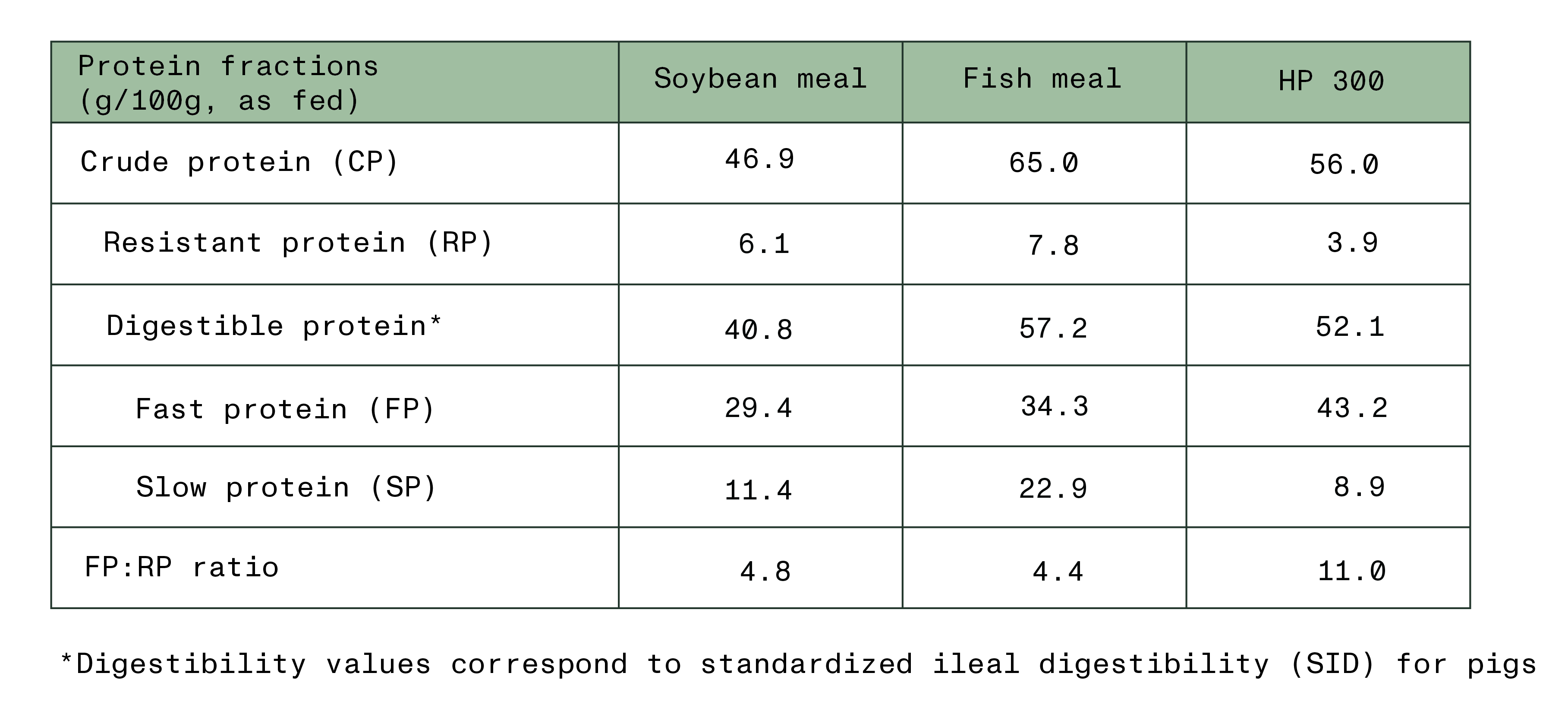
Table 1: Fast-protein to resistant-protein ratios and protein fractions of soybean meal, fish meal (65%), and HP 300 (Hamlet Protein)
How to Reduce Fish Meal in Shrimp Diets Without Compromising Performance
Incorporating protein digestion kinetics and the balance between rapidly digestible and resistant protein offers a functional approach to ingredient evaluation. For fish and shrimp nutrition, this also means considering how to provide the protein functionality they require during their lifecycles.
For instance, when HP 300 replaced fish meal in juvenile shrimp diets, improved methionine utilization was found across two trials; both trials had a duration of 42 days, starting with a weight of around one gram and finishing with approximately 5 grams per individual:
High fish meal, high Methionine: Figure 1 compares shrimp performance relative to a control diet containing 20% fish meal. Fish meal (20% in the control diet) was partially replaced by 3% or 6% HP 300. No crystalline amino acids were added, resulting in a slight decrease in dietary methionine concentration (from 0.85% to 0.82% and 0.80%, respectively). Despite the lower methionine content, the diet containing 3% HP 300 produced numerical improvements in weight gain, biomass gain, and survival, while achieving the lowest feed cost per kilogram of biomass produced. Increasing HP 300 to 6% maintained performance comparable to the control, indicating that moderate fish meal replacement is feasible when dietary methionine remains adequate.
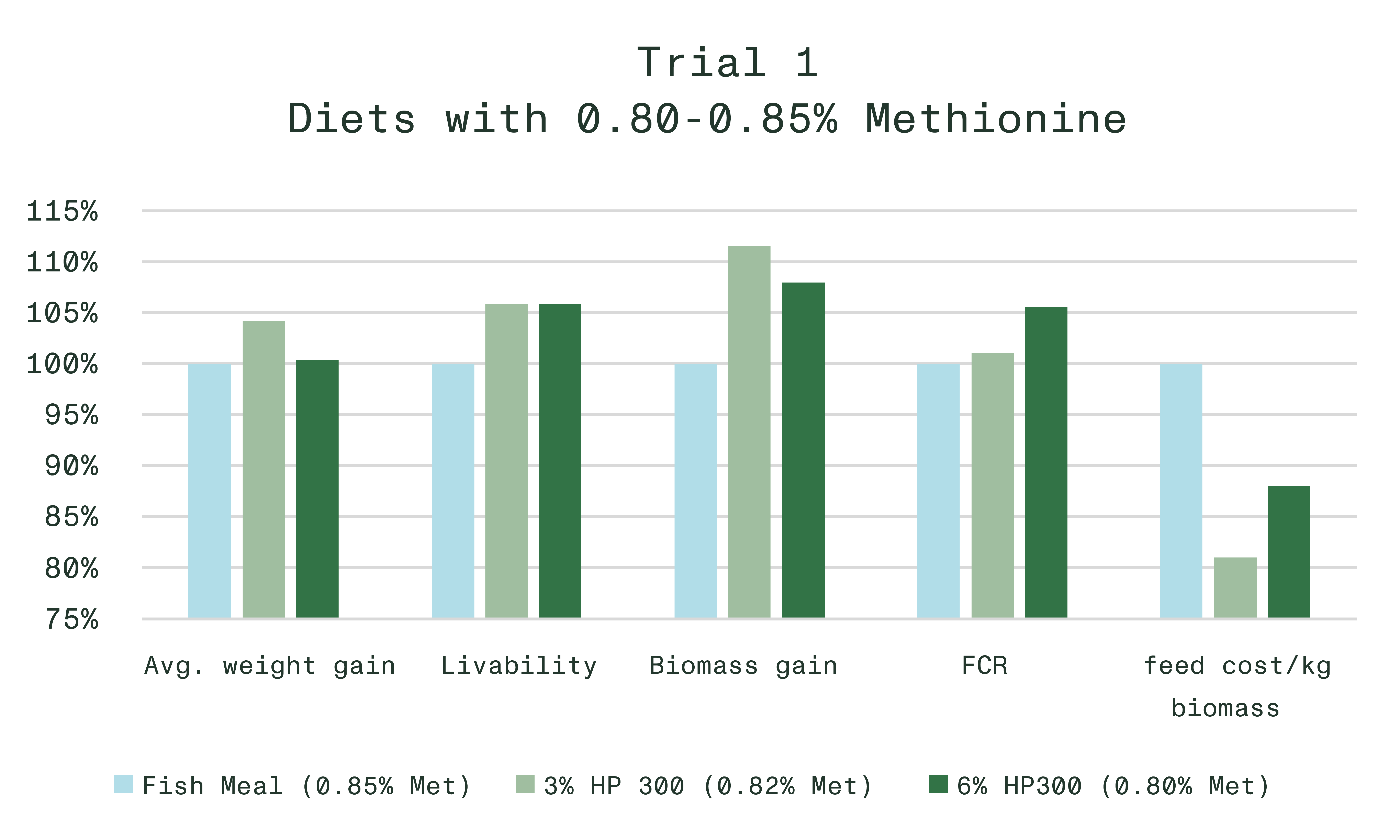
Figure 1: Effect of partial fish meal replacement with enzyme-treated soybean meal (HP 300) on shrimp growth performance, feed efficiency and production economics (values expressed relative to the 20% fish meal control). Different letters in the columns for each parameter indicate significant differences (p < 0.05). These results were featured in International Aquafeed, April/May, 2016.
Low fish meal, low Methionine: A second trial evaluated more extensive replacement of marine protein sources. The control diet contained 16% fish and squid meal (4:1 ratio); the two treatment diets were formulated with 6% or 12% HP 300 replacing the marine sources. In this study, dietary methionine levels were lower (0.75%, 0.70%, and 0.65%). Figure 2 shows that increasing the replacement level reduced individual weight gain, with the highest replacement reaching 88% of the control. However, this reduction was largely compensated by improved survival, resulting in only a small decrease in total biomass production while feed conversion remained essentially unchanged.
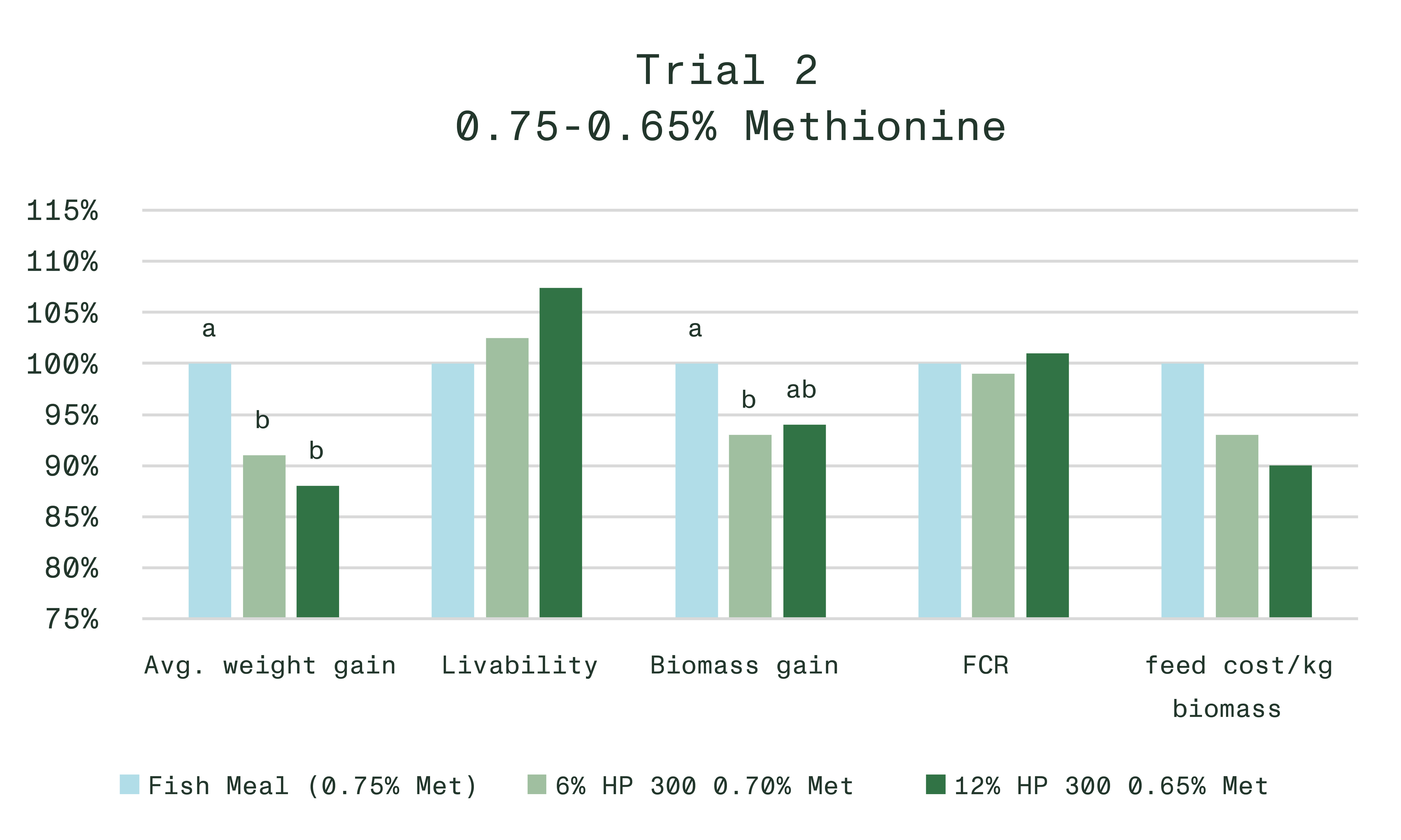
Figure 2: Effect of partial fish meal replacement with enzyme-treated soybean meal (HP 300) on shrimp growth performance, feed efficiency and production economics (values expressed relative to the 16% fish/squid meal control). Different letters in the columns for each parameter indicate significant differences (p < 0.05).
Although the diets containing HP 300 supplied less methionine than the fish meal controls, methionine utilization consistently improved (10-20% higher than the fish meal controls). A higher rate of protein absorption may have enhanced protein synthesis, allowing dietary methionine to be used more efficiently. While this mechanism requires further investigation, it is consistent with the concept that protein functionality depends not only on amino acid composition, but also on the kinetics of protein digestion and absorption. However, the best performance is achieved when supplementing with synthetic methionine, according to the operation’s technification and performance levels.
The present and future of aquafeed formulation rely less on individual ingredients and more on the functional complementarity of different protein sources. Adding digestion kinetics, rather than crude protein or digestibility alone, to protein evaluation provides nutritionists with an additional framework for optimizing growth, nitrogen utilization, and sustainability.
Want to evaluate fish meal replacement options?
Learn how HP 300 can help you reduce fish meal inclusion while supporting shrimp performance, feed efficiency and protein utilization.
What Is the Fast Protein : Resistant Protein Ratio?
Traditional protein evaluation focuses on crude protein and amino acid digestibility. The Fast Protein : Resistant Protein ratio adds another dimension by measuring how much protein is rapidly available to the piglet versus how much reaches the hindgut.
Frequently Asked Questions About Fish Meal Replacement in Shrimp Feed
Why are shrimp producers looking for alternatives to fish meal?
Fish meal remains a highly valued protein source in aquaculture due to its digestibility, palatability, and nutritional profile. However, limited supply, price volatility, sustainability concerns, and inconsistent quality are driving interest in alternative protein sources for shrimp feed.
What makes a good fish meal replacement in shrimp diets?
An effective fish meal replacement should provide highly digestible protein, a balanced amino acid profile, and support efficient nutrient utilization. Beyond crude protein content, nutritionists increasingly consider factors such as protein digestibility, digestion kinetics, and functional protein fractions when evaluating alternatives.
Can soybean protein replace fish meal in shrimp feed?
Conventional soybean meal has long been used in aquaculture diets, but its application may be limited by antinutritional factors (ANFs) and lower attractability. Processing technologies such as enzymatic treatment can reduce ANFs and improve protein functionality, making enzyme-treated soy proteins a viable option for partial fish meal replacement.
Why is crude protein not enough to evaluate protein quality?
Crude protein measures total nitrogen and does not distinguish between nutritionally valuable protein and non-protein nitrogen compounds. As a result, crude protein may overestimate the true nutritional value of some ingredients. Protein digestion kinetics and amino acid availability provide additional insights into protein quality and performance.
What are fast, slow, and resistant proteins?
Fast proteins are rapidly digested and absorbed, providing amino acids early in the digestive process. Slow proteins require more extensive digestion before absorption. Resistant proteins are not efficiently digested and contribute little to animal nutrition, potentially increasing nitrogen losses and reducing feed efficiency.
The fast-protein-to-resistant-protein ratio is a protein quality indicator that compares rapidly digestible protein to protein that escapes digestion. A higher ratio may indicate more efficient protein utilization and lower nitrogen losses, providing nutritionists with an additional tool for evaluating protein ingredients beyond crude protein content alone.
Does reducing fish meal affect shrimp growth and performance?
Research trials demonstrated that partial replacement of fish meal with enzyme-treated soy protein (HP 300) maintained comparable shrimp performance while improving production economics. Results depend on formulation strategy, amino acid balance, and inclusion levels.
How can nutritionists reduce fish meal without compromising performance?
Successful fish meal reduction requires more than replacing protein on a crude protein basis. Nutritionists should consider digestible amino acids, protein functionality, digestion kinetics, and methionine supplementation strategies to maintain shrimp growth, survival, and feed efficiency.
Protein functionality considers not only how much protein is present but also how it is digested and utilized by the animal. By incorporating digestion kinetics and the balance between fast digestible and resistant protein, nutritionists can further optimize growth performance, nitrogen utilization, and feed sustainability.
About HAMLET PROTEIN
